Tarangire National Park: Why It’s Tanzania’s Most Underrated Safari Destination
Everyone talks about the Serengeti and Ngorongoro. They’re spectacular — I won’t argue that. But if you ask me which park I’d choose to spend an extra day in, it’s Tarangire. Every single time.
Tarangire doesn’t get the headlines, which is exactly why it’s so good. While everyone else is crowding around a lion sighting in the Serengeti, Tarangire gives you the same quality wildlife with a fraction of the vehicles. It’s quieter, greener, and home to the largest elephant herds in Tanzania.
Here’s why Tarangire deserves more than the one-night stopover most itineraries give it.
The Elephant Herds Are Extraordinary
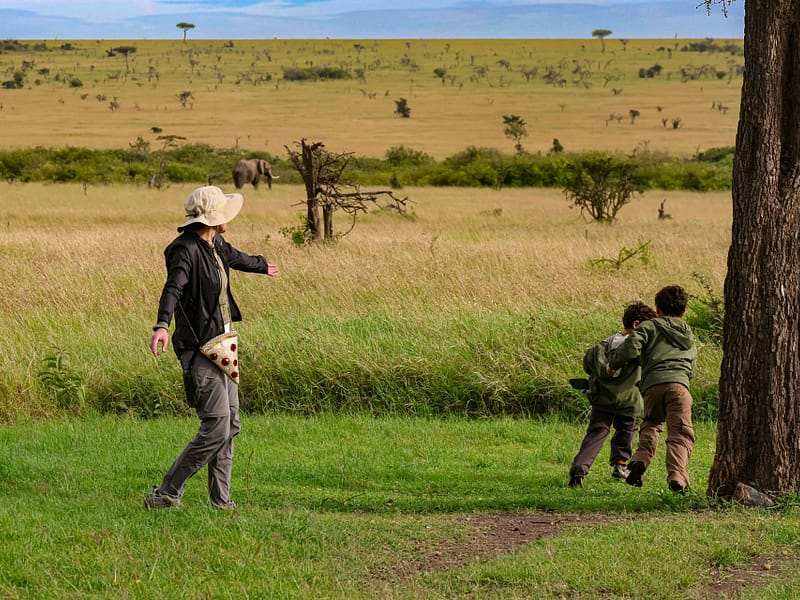
Tarangire has one of the highest concentrations of elephants in Africa — over 3,000 individuals in a park that’s only 2,850 square kilometers. During the dry season (June through October), the Tarangire River becomes the only permanent water source for hundreds of kilometers. Elephants migrate from surrounding areas to drink here.
I’ve sat at the river in August and counted over 250 elephants in a single afternoon. Entire herds — babies, teenagers, matriarchs — all coming down to bathe and drink. They’re so relaxed around vehicles that you can watch them for hours at close range. Mothers teaching calves to use their trunks. Young bulls play-fighting. Families dust-bathing in the red soil.
If you want elephant encounters, Tarangire is unmatched. The Serengeti has elephants, but they’re scattered across a massive area. Here, they’re concentrated and visible.
The Baobab Trees Are Unlike Anything Else
Tarangire’s landscape is dominated by giant baobab trees. Some are over 1,000 years old. Their massive trunks and twisted branches look almost prehistoric. During the dry season, when the grass is golden and the baobabs are leafless, the scenery is surreal — like something out of a fantasy novel.
Lions use the baobabs as lookout points. Leopards drape themselves over the branches. Elephants stand beneath them for shade. The trees aren’t just backdrop — they’re part of the ecosystem. And photographically, they’re stunning. Every photo you take in Tarangire has a baobab in it somewhere.
The Predators Are Here (And Easier to Spot)
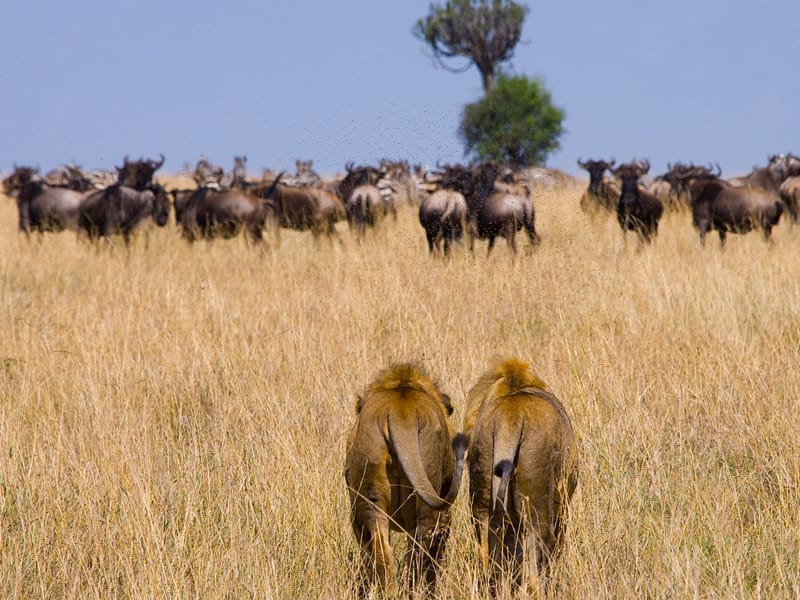
Yes, Tarangire has lions. Lots of them. Multiple prides. Also leopards, cheetahs, and wild dogs (rare but present). People assume the Serengeti is the only place for predator sightings, but Tarangire delivers just as well — especially during dry season when prey animals concentrate near the river.
What makes Tarangire different is the vegetation. The park has open grasslands mixed with acacia woodlands and riverine forest. This variety means you see different animals in different zones. In the Serengeti, it’s mostly endless plains. Tarangire feels more layered, more textured.
I’ve had mornings in Tarangire where we spotted lions on a kill, a leopard in a tree, and a cheetah stalking impalas — all before 10am. That’s not luck. That’s just how dense the wildlife is here during peak season.
Far Fewer Crowds Than Serengeti or Ngorongoro
This is the big one. In July and August, the Serengeti and Ngorongoro get crowded. When someone spots a lion, 15 vehicles converge within minutes. It’s still worth visiting, but the experience feels less wild when you’re surrounded by other tourists.
Tarangire doesn’t have that problem. Even in peak season, you might see 3-5 other vehicles during a full-day game drive. Sometimes none. It feels like you have the park to yourself. When you find a leopard or a lion pride, you’re often the only vehicle there for 20, 30 minutes before anyone else shows up.
For people who value solitude and don’t want a “safari traffic jam” experience, Tarangire is massively underrated.
When to Visit Tarangire
Tarangire is a year-round park, but the dry season (June through October) is when it’s at its best. This is when wildlife concentrates around the Tarangire River and game viewing is at its peak. The grass is short, visibility is excellent, and you’ll see massive elephant herds.
The wet season (November through May) is when the park is greenest and birdlife is spectacular. Over 550 bird species have been recorded here — more than in many entire countries. Migratory birds arrive from Europe and Asia. The landscapes are lush. But animals disperse because there’s water everywhere, so wildlife viewing isn’t as concentrated.
If you’re on a tight schedule and can only visit one park intensively, time it for dry season. Read our full seasonal guide here.
How Long Should You Spend in Tarangire?
Most itineraries give Tarangire one night. That’s a mistake. One night means one morning game drive and one afternoon drive. You’ll see wildlife, but you won’t really experience the park.
I recommend at least two nights. This gives you two full days of game drives. You can explore different areas of the park — the river in the south, the swamps in the north, the acacia woodlands. You’re not rushing. And if you find a great sighting (a leopard sleeping in a tree, a lion pride with cubs), you can stay and watch without worrying about getting back to camp on time.
Three nights is even better if your budget allows it. By day three, you’ve settled into the rhythm of the park. You know where the animals hang out. Your guide can take you to spots he skipped on day one because you’ve already covered the highlights.
Tarangire vs Lake Manyara
People often ask whether they should visit Tarangire or Lake Manyara if they only have time for one. The answer is Tarangire, almost always.
Lake Manyara is beautiful — tree-climbing lions, flamingos, stunning rift valley scenery. But it’s small (330 sq km, and two-thirds of that is the lake itself). You can see most of it in a half-day. Tarangire is nearly nine times larger with far more wildlife variety and density.
If you have time for both, great. If you have to choose, Tarangire gives you more bang for your buck.
Want to spend more time in Tarangire? Most of our safari packages can be customized to add extra nights in any park. Tell us which parks matter most to you using our Trip Designer and we’ll adjust the itinerary accordingly.